Jump to:
A potting shed can be useful for both plant care and storage. How you set it up allows you to maximise the space and make it functional, organised, and appealing. These potting shed ideas will walk you through inspirations to get started.
How to Set Up a Potting Shed
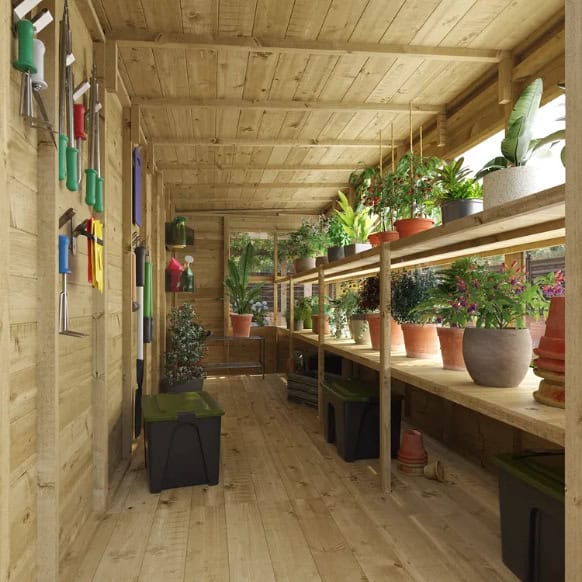
This depends on the main function of your hobby garden space and the available room. For instance, you’ll need to prepare tray shelving for starting seeds, as potting sheds don’t have them built in. Wall-mounted hooks are also handy for storing tools.
The size is equally important because it determines how much you can fit in. Knowing how you want to use your potting shed will help you prioritise what’s necessary.
What do you need in a potting shed?
For general plant care and storage:
- Seed starting racks: This is where trays or pots are kept during the initial stages of plant growth. Vertical racks save floor space, while multi-tiered designs prevent overcrowding of young plants. However you should note that seedlings are especially vulnerable to problems caused by excess humidity, so you should ensure you provide adequate ventilation.
- Hanging hooks: A place for your gardening hand tools to store when not in use. These include a trowel, pruning shears, garden scissors, and your trusty gloves. Large varieties like shovels, rakes, and hoes are best propped against a wall. This will keep them in one place, rather than lying on the floor or getting mixed with the other supplies. Just make sure they are fitted securely to the wooden walls for anything heavy.
- A potting bench: This will be your main working area for basic potting chores. It can be as simple as an old table offering a surface to work on. Or you could build your own using pallets and add extra storage for potting mix and extra resources. The DIY route also lets you customise the bench size to ensure it fits well.
Optional but practical:
- More windows: This applies if your potting shed is converted from a standard shed with few or no windows. A bit of carpentry is needed to modify the structure and carry out the installation.
- Supplemental lighting: A great example is grow lights. These specialised lights are designed to compensate for the lack of natural sunlight. LEDs are a great choice—they’re energy-efficient and have customisable light spectrums. This means you can adjust the light colours to suit different plant growth stages. Full-spectrum LEDs are the ones to look for.
Potting Shed Interior Ideas
We’re done with the main setup, and now it’s time for finishing touches with these potting shed decors! Putting in a bit of extra effort can turn the space into a plant paradise, such as:
A splash of colour with milk paint
Milk paint is made from natural ingredients like milk protein and lime. It’s biodegradable, free from harmful chemicals, and safe for plants and pets.
Go for light, neutral shades, such as soft whites and pastels, for a light, neutral scheme on the walls and shelves.
Swapping basic pots for those with decorative designs
Colourful plant pots with patterns or those in different shapes are your best bet. Instead of the standard clay or terracotta, mix in marble or metal pots to add texture and interest.
Wrap colourful ribbons around each pot for a stylish way of grouping plants.
Fairy lights addition
Fairy lights are always a good choice, especially if you spend more time in your potting shed in the evening. Drape them along the edges of the shelves, around the windows, or on the ceiling beams. Battery-operated lights are ideal if you have limited power sockets.
Note: Fairy lights shouldn’t be used as a replacement for grow lights.
Relaxing sound elements
Installing a wind chime outside the window or near the entrance can do the trick. The calming sound of the wind hitting the chimes creates a relaxing atmosphere.
A small water feature, like a tabletop fountain, can double the calming effect. Its compact design allows it to sit on a table or shelf. Just make sure not to allow this to create a stagnant water issue inside the shed.
How to organise your potting shed
A potting shed earns its keep when everything has a place. Left unchecked, spare pots pile up on the floor, half-used bags of compost slump in the corners, and hand tools disappear under the clutter. A few simple storage habits keep the space tidy and your gardening flowing. Here are seven ways to bring order to yours.
1. Fit a potting bench
A potting bench gives you a dedicated surface for potting up plants, trimming, and keeping your most-used supplies within reach. Whether you have a whole wall to spare or just a tight corner, a bench anchors the workspace. Building your own lets you plan in shelving and a work surface to suit the room; a ready-made bench with storage underneath saves the effort. Position it near the door for easy in-and-out, or under a window or skylight so you are working in natural light.
2. Use lidded storage bins
Swap flimsy bags for sturdy, lidded bins to keep compost, sand, and other loose materials contained. Clear bins are worth the small extra cost — you can see what is inside at a glance without opening every lid. Tuck them under the potting bench so they are out of the way but easy to reach.
3. Add a dedicated tool rack
Forks, spades, loppers, rakes, and brooms take up far less room stored vertically than leaning in a heap. A wall-mounted tool rack keeps them tidy and quick to grab. Choose a design with several hooks or slots, and group tools by size or type so you always know where each one lives.
4. Put up shelving
Wall shelving is the simplest way to reclaim floor space. It is not just for pots — seed packets, twine, labels, and other small bits sit neatly on a shelf rather than cluttering the bench. Adjustable shelves are the most flexible, letting you resize the gaps as your container sizes change.
5. Install a potting sink
A water source in the shed makes potting and clean-up far easier. An old sink big enough to hold pots and a watering can does the job nicely — look for one with a hard-wearing tap. Set it at a comfortable working height, and either plumb it in or connect it to a water butt to make use of collected rainwater.
6. Create a hanging basket station
Hooks or rails on the wall or ceiling turn dead space into storage. Hang baskets of frequently used odds and ends where they make sense for how you work — near the bench if that is where you start. Keeping things where you reach for them saves time and keeps the surfaces clear.
7. Hang a pegboard
A pegboard puts gloves, twine, snips, and other small tools on display and off the shelves. Add hooks where you need them and arrange your most-used items within arm’s reach. It is one of the easiest ways to free up both shelf and floor space.
Get these few things in place and the shed more or less keeps itself tidy — less time hunting for the trowel, more time actually gardening. If you are still choosing a shed to set up this way, browse our potting sheds, and add a shelving unit to make the most of the walls.
Round-up
Setting up your potting shed comes down to how you plan to use the space. Focus on what you need, like racks for seedlings, tool storage, and a workbench—and you’ll be off to a good start. Throw in a bit of colour, string up fairy lights, or add a small water feature to personalise and make it inviting.
We hope these ideas will help you make your potting shed a setting you enjoy working in! Garden Buildings Direct offers a quality range of potting sheds. For inquiries, contact our team at 01909 768840.
Another helpful guide for you: How Do You Turn a Shed Into a Potting Shed?